

balance board standing desk setups are becoming the new normal in modern offices, promising improved focus, better energy, and reduced discomfort—if you choose and use them wisely. This guide breaks down the true pros and cons, offering scientific evidence, user survey data, and practical advice so you can decide if a balance board or active standing mat fits your workflow and budget.
Key Takeaways
- Active standing on a balance board engages muscles, boosts energy, and improves posture compared with static standing.
- Most users see measurable benefits in comfort and focus within weeks, but durability and safety complaints are common—choose models accordingly.
- For best results, use a board or mat in 15–30 minute sessions, alternate with static standing or seated work, and select a model suited to your space and needs.
- Why “active standing” matters — what a balance board standing desk actually does
- Step-by-step guide: How to integrate active standing into your workday
- Advanced analysis & common pitfalls: Evidence and real user complaints
- Conclusion: Should you use a balance board standing desk?
- FAQ: Balance Board Standing Desks
Why “active standing” matters — what a balance board standing desk actually does
Active standing means you’re not just standing in one place—your body is making continuous micro-movements that engage multiple muscle groups. A balance board standing desk setup requires subtle shifts in your ankles, knees, hips, and core to maintain stability. This movement is what turns passive standing into an active process.
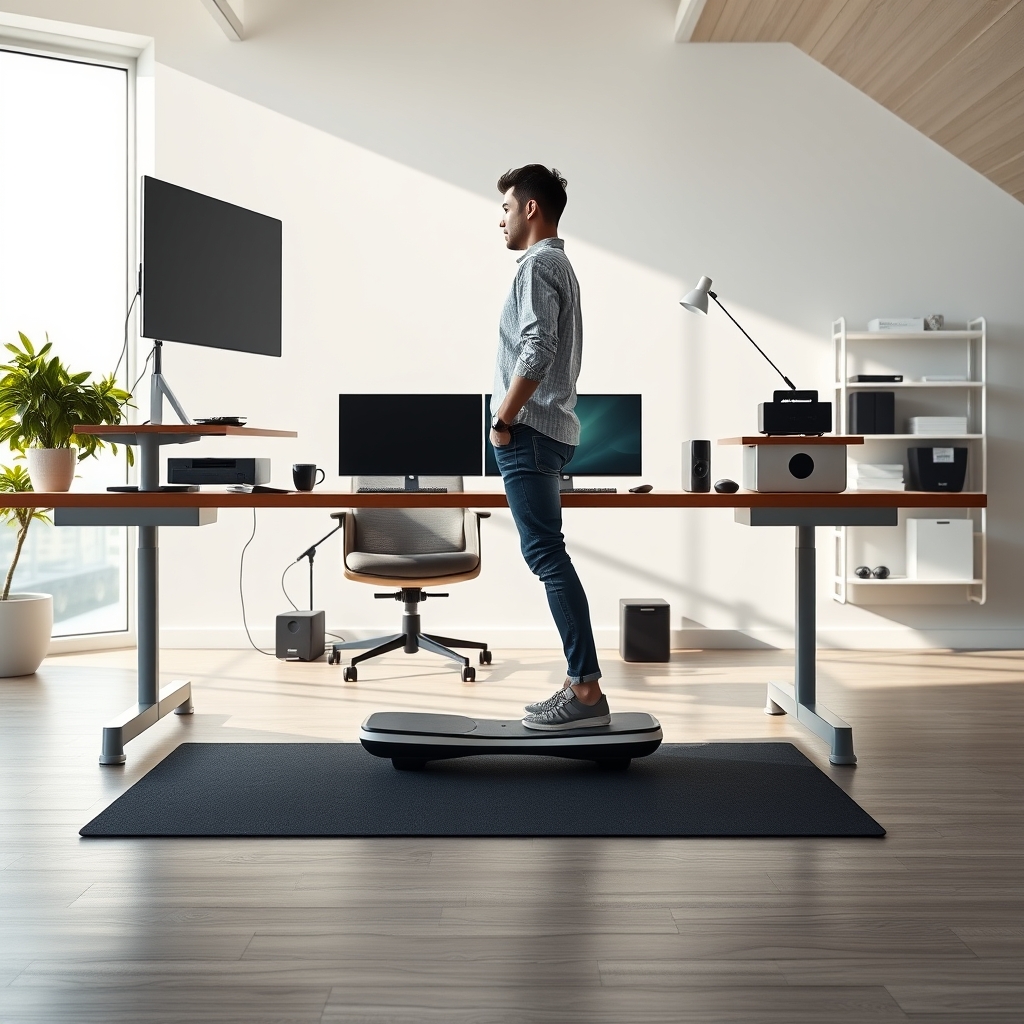
Unlike static standing, which can lead to tired legs and stiff joints, active standing raises your daily energy output by 10 to 15 percent compared to immobile standing [1]. This gentle activity improves blood circulation, maintains postural alignment, and keeps you more alert even during long workdays. These micro-adjustments mimic natural movement, helping prevent stiffness and discomfort—key factors overlooked when simply swapping from sitting to standing.
Research and hundreds of user surveys confirm that using a balance board or an active standing balance mat at a standing desk leads to a noticeable uplift in workplace comfort and energy by actively engaging your feet and core [2].
Step-by-step guide: How to integrate active standing into your workday
Ready to add dynamic movement to your day? Here’s a practical, evidence-backed way to get started without derailing your workflow or causing office distractions.
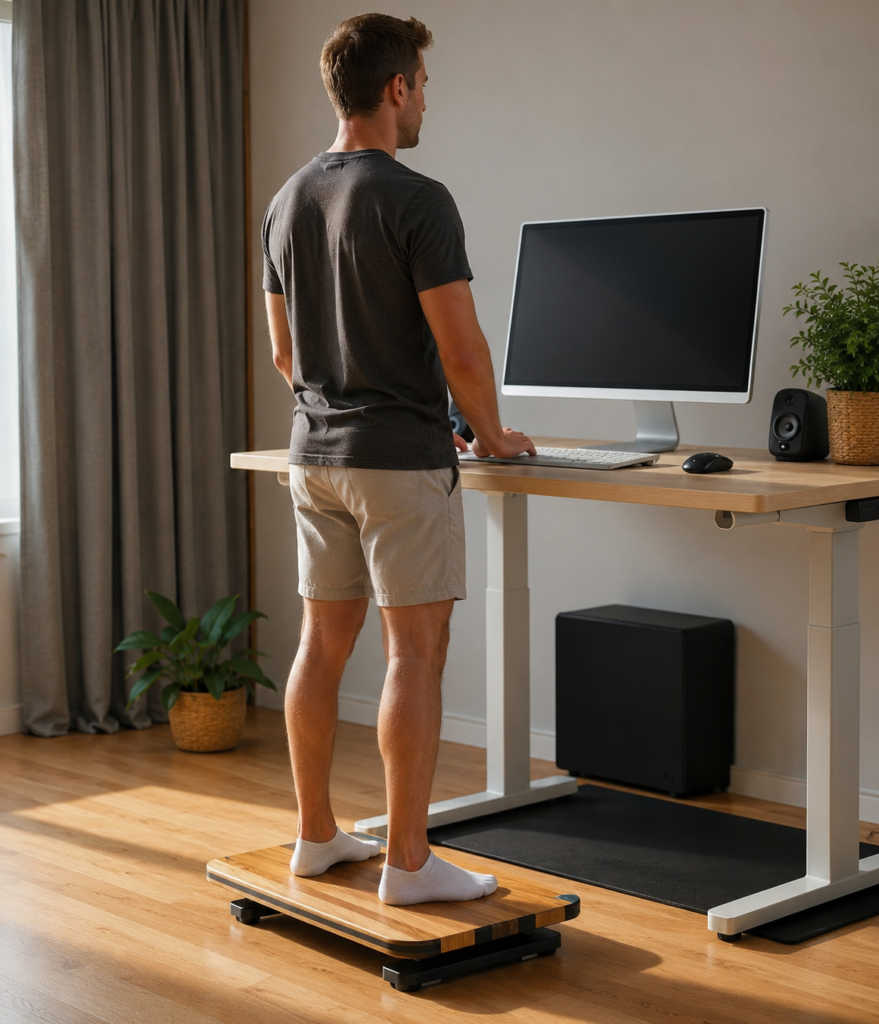
- Assess your workspace. Ensure your standing desk is high enough to support stable, ergonomic posture with slightly bent elbows. Remove tripping hazards around your desk.
- Pick the right product for your needs. If you want subtle, low-noise movement, consider an active standing balance mat. For more engagement, opt for a mid- or high-end balance board with adjustable settings. Check stability and weight ratings.
- Begin gradually. Balance boards and active standing mats bring a learning curve. New users should limit sessions to 10-15 minutes, increasing to 30 minutes as confidence grows. Pair with static standing or sitting if fatigue sets in [8].
- Follow an alternating schedule. Aim for 2-3 board sessions per hour, broken up with sitting, static standing, or walking around. Most users feel benefits with 15-30 minutes at a time [9].
- Safety first. Always place your board on a stable, flat surface. Stand with feet hip-width apart. Avoid quick shifts or jumps, especially if you’re new.
- Fit your footwear and stance. Use shoes with a supportive sole or thick socks, especially on firmer boards. Regularly reposition your feet to avoid fatigue.
- Track your metrics. Notice changes in comfort, pain, and focus. Many users report measurable improvements in joint pain, energy, and productivity within several weeks of consistent use [7].
For more tips, see our guides on ergonomic office chairs and standing desk upgrades.
Advanced analysis & common pitfalls: Evidence and real user complaints
Even with proven benefits, not every balance board standing desk experience is positive. Scientific studies and broad user surveys from 2023–2024 highlight both the upsides and the drawbacks. Below, we dive into what to watch for—so you avoid wasting money or risking discomfort.
| Product Type | Pros | Cons / Common Complaints | Typical Price (USD) |
|---|---|---|---|
| Entry-level balance board | Lightweight, affordable, easy to move | Wobbly, can creak or make noise, lower durability (warping, surface wear), minor fall risk | $50–$120 |
| Mid-range board (adjustable tension, better materials) | Greater stability, adjustable, quieter, longer lifespan | Still some learning curve, may be heavy, costlier | $120–$250 |
| Premium ergonomic board | Reinforced frame, interchangeable tilt settings, improved cushioning, better warranties | Bulkier, expensive, not always “office silent” | $250–$500+ |
| Active standing balance mat | Very low risk, quiet, soft on feet, supports long sessions, easy for beginners | Less dynamic movement, may wear quickly, less muscle engagement | $50–$250 |
Most common pitfalls:
- Feeling unstable or risking a fall—especially during the initial adaptation period.
- Noisy rocking or creaking—can be disruptive in shared offices.
- Durability issues: warping decks, loosening bolts, worn surface pads after months of use.
- Mismatch in board firmness—too stiff or too soft, triggering foot fatigue.
- Overuse—using a board for too long without breaks, leading to discomfort or strain.
User surveys report that 58–62 percent noticed less joint or back discomfort, 55–60 percent more energy, and 45–50 percent improved daily productivity after weeks of active use [2]. However, the negative reviews almost always mention issues with safety wobble, surface wear, and disruptive noise. Selecting the proper price band and product for your actual needs is key.
Looking for quiet options or long-term durability? Compare more active and passive solutions with our anti-fatigue mat guide and standing desk converter tips.

Conclusion: Should you use a balance board standing desk?
Modern offices need more than “just standing.” The evidence shows that using a balance board standing desk boosts muscle activity, fights fatigue, and substantially raises workday comfort—if you start slow, choose the right product, and pay attention to safety and durability. Track your own results over 4–8 weeks, and don’t be afraid to trial a few models. Balance board standing desk setups may not suit every task or budget, but for many, they unlock focus and real relief.
Ready to upgrade your routine? Try a board or active standing mat for 15–30 minutes per session, alternate with other postures, and see how your energy and focus respond. Share this guide with your colleagues or workplace decision-makers for a smarter, healthier office.
FAQ: Balance Board Standing Desks
How long should I stand on a balance board per session?
Most experts recommend 15–30 minute sessions at a time, alternating with static standing or sitting. Overuse can cause fatigue, especially for new users.
Are balance board standing desks safe?
They are safe when used responsibly. Start gradually, use stable footwear, and make sure your board is on a flat surface. Avoid using near sharp edges or clutter. Follow our safety protocols and progression tips above.
Which type works best in a shared office: balance board or active standing balance mat?
For shared settings, many choose active standing balance mats or low-noise boards to minimize distractions. Mats are best for long sessions or if noise is a concern.
Do balance boards improve productivity?
Surveys show 45–50 percent of users notice a productivity lift after regularly using a board in 15–30 minute sessions. Benefits are individualized, so track your own energy and focus for a few weeks.
How should I choose the best product for my needs?
Match your priorities—stability, adjustability, noise, material quality, and budget—to the product. Review our step-by-step buying guide and table above for pricing and feature comparisons.