

Articulating monitor arm dual solutions are rapidly becoming the new standard for workspace flexibility, durability, and ergonomic support, especially in modern hybrid and shared workroom environments.
Key Takeaways
- Market adoption for articulating dual monitor arms is surging — projected to double from USD 1.2 billion (2024) to USD 2.5 billion by 2033, with North America and Asia-Pacific leading in deployment.
- Long-term durability, compatibility, and multi-user reconfiguration are critical factors — overlooking these leads to frequent failures, wasted investment, and user complaints.
- Practical setup, maintenance, and workflow planning significantly minimize ergonomic risk and downtime for shared workspaces and hot-desking scenarios.
- Market snapshot — why articulating monitor arm duals matter in 2024
- Who benefits most — ideal use cases and buyer profiles
- Top user pain points — what buyers must avoid
- Three overlooked topics top articles miss (and why they matter)
- Technical specs that distinguish the best articulating monitor arm duals in 2024
- Feature set vs price — what justifies premium cost
- Ergonomics, productivity and workspace optimization — evidence and expert takeaways
- Installation checklist — common compatibility issues and how to resolve them
- Maintenance, durability and lifecycle costs — what procurement should plan for
- Quick selection guide — pick the right model for your environment
- Step-by-step setup and reconfiguration flow for shared/hybrid desks (practical SOP)
- Buyer checklist and procurement template (short)
- Appendix — trusted brands, warranty norms, and quick reference links
- FAQ
Market snapshot — why articulating monitor arm duals matter in 2024
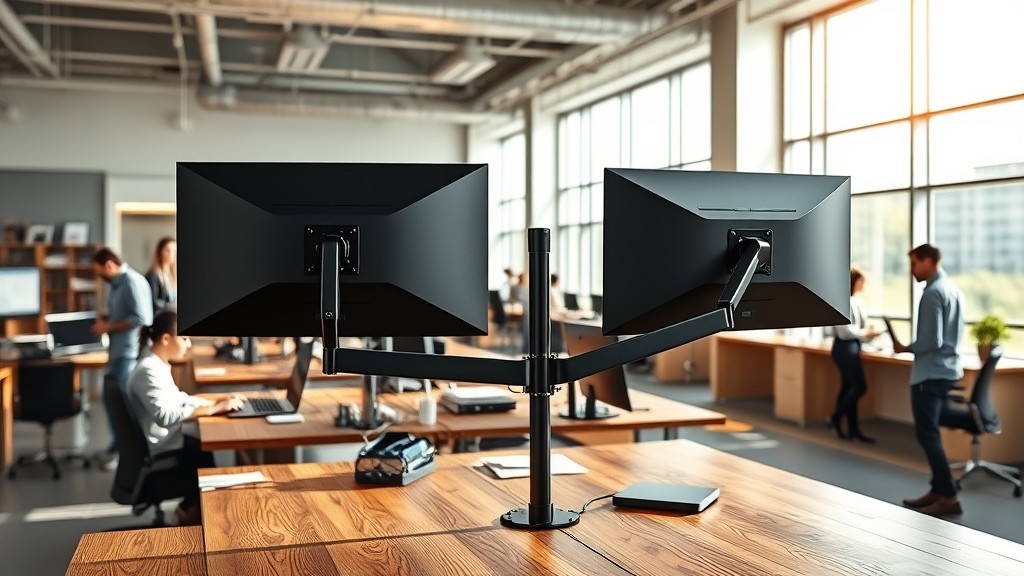
Facilities and procurement leaders face a strategic inflection point: demand for articulated dual monitor arm mount desk solutions is escalating as organizations standardize on flexible, ergonomic workspaces. According to industry research, the global articulating monitor arm dual market stands at $1.2 billion for 2024 and is forecast to skyrocket to $2.5 billion by 2033 — a 9% compound annual growth rate. North America leads global adoption with over 50% of office workstations now equipped with these arms; Europe approaches 45%, and the Asia-Pacific region is both the fastest-growing and approaching majority adoption.
- Investment timing is ideal — many firms are accelerating upgrades as hybrid/remote and hot-desk setups become standard.
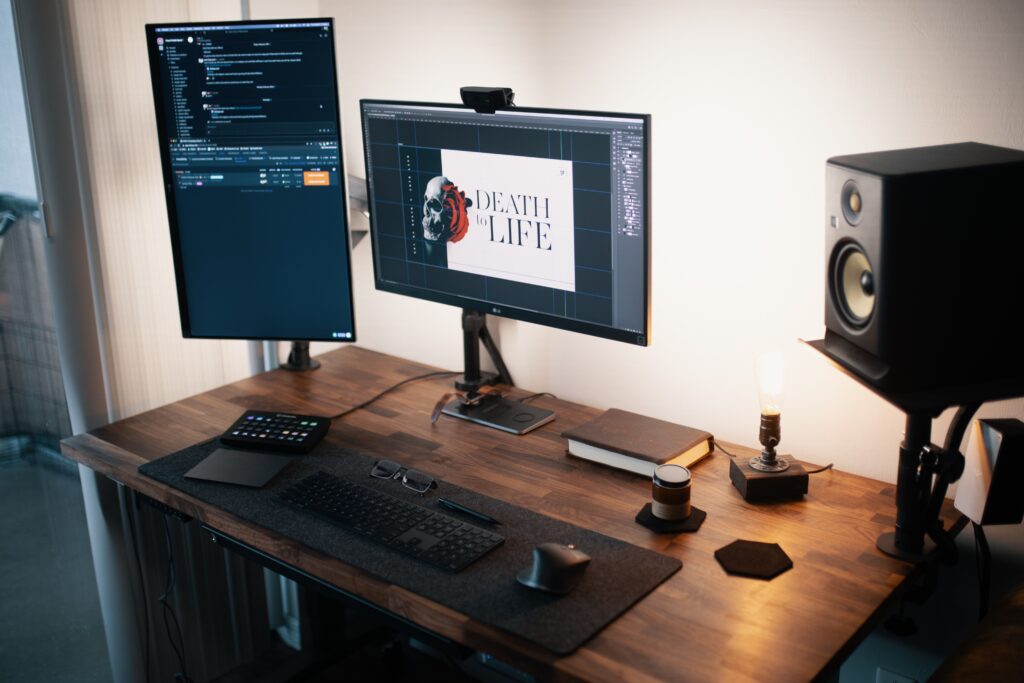
- Articulating dual arms optimize both space and ergonomic outcomes, which reduces long-term workplace health, productivity, and real estate costs.
- High growth is underpinned by ROI in dense shared work environments where desk space and user configuration flexibility are critical.
See NexoraPulse Analytics, “Dual Monitor Arm Market: Regional Industry Outlook” and related Straits Research market data for further statistics.
Who benefits most — ideal use cases and buyer profiles
Understanding who gains the most from a dual monitor arm mount desk system helps align procurement and setup with the real needs of modern workplaces:
- IT/Procurement Officers: Gain economies of scale, simplified deployment, and minimized incompatibility risk by standardizing on adjustable dual arm platforms.
- Facilities Managers: Boost desk utilization, enable quick reconfiguration, and avoid workspace churn with modular arms compliant with evolving layouts.
- Hybrid/Remote Tech-Savvy Workers: Experience immediate ergonomic upgrades and personal customization, reducing neck, shoulder, and back strain.
- Shared and Hot-desk Environments: Switch users with minimal downtime. Multi-user preset adjustments and easy arm repositioning enable rapid handoffs.
- Data shows over 58% of new workstations are now delivered with articulated arms, driven by ergonomics demands and tight-space optimization (see GlobalMarketStatistics).
- Hot-desking and flex spaces see measurable dips in user satisfaction and productivity when slow-to-adjust or unstable mounts are deployed — something easily averted by choosing the right dual monitor arm mount desk system.
- For sit-stand desks, confirm vertical travel (at least 12″ is best practice) and tension tuning per monitor weight, ensuring true ergonomic benefit.
Top user pain points — what buyers must avoid
Despite surging demand, user complaints about articulating monitor arm dual products remain common. Research points to these recurring pitfalls:
- Wobbling and Sagging: Cheapest arms often flex, wobble, or droop over time — especially if monitors are at or near max rated weight. This leads to safety and alignment issues.
- Insufficient Rear Clearance: Many systems require 4-8″ space behind the desk for full articulation. Desks flush to walls create collision risks unless the arms are specifically designed for tight clearances.
- VESA pattern and Weight Compatibility Failures: Non-VESA monitors or units that exceed arm load specs (commonly 8-20 lbs per arm) result in failed installations or require costly adapter kits.
- Noisy or Instable Operation: Lack of proper tensioning, poor hinge quality, or subpar gas springs can cause creaking, grating, or vibrating arms—particularly when switching users or extending arms frequently.
- Unexpected Need for Reinforcement/Professional Install: Thin or soft-desk surfaces may require extra plates; arms may need special bolts or technical skill, adding hidden costs and delays.
| Pitfall | Impact | Prevention |
|---|---|---|
| Monitors too heavy / VESA mismatch | Arm sags, fails, or won’t lock | Double-check per-arm specs; confirm VESA pattern and weight before purchase |
| Insufficient wall/desk clearance | Cannot fully position or articulate monitors; arm/wall damage | Measure rear space needed; consider wall mount solutions if needed |
| Poor gas spring or hinges | Noisy, unstable, or difficult to adjust over time | Choose reputable brands with long warranty coverage |
| No cable management | Messy desks, more downtime when swapping users | Require built-in cable routing in your RFPs |
Recent user research confirms these installation and compatibility hurdles are a leading cause of project failures and complaints.
Three overlooked topics top articles miss (and why they matter)
- Long-term Durability / Maintenance: Most guides ignore cost-of-ownership differences between gas spring (smooth adjustability but can leak or lose tension after 2-4 years) versus mechanical (lower maintenance but harder to adjust). Specify your expected lifecycle in procurement templates.
- IoT/Smart-Arm Integration: The emerging class of smart monitor arms (with posture or multi-user presets, user tracking, or integration into occupancy analytics) are game changers for large or hybrid offices, but almost never discussed.
- Step-by-Step Reconfiguration Workflows: Virtually no content covers how to actually reconfigure monitor arms for new users — even though this is a root cause of downtime and ergonomic complaints in shared/hot-desk settings.
Research flags these as critical buyer blind spots. For more on workflow and configuration, see our in-depth dual monitor arm buying guide.
Technical specs that distinguish the best articulating monitor arm duals in 2024
Not all dual arms are created equal—these are the must-have specs to compare before purchase:
- Per-Arm Max Load: Target at least 8-20 lbs per arm (best practice; always verify with manufacturers and futureproof for heavier displays).
- Combined Load Capacity: Ensure full-dual extension does not exceed system total weight rating.
- VESA Support: 75x75mm and 100x100mm required for 99% office monitors.
- Tilt/Swivel/Pan Ranges: Broad adjustability (typically ±45–90° tilt, 180° rotation).
- Vertical Travel/Reach: Minimum 12″ lift for sit-stand; extension arm reach 16–26″ typical.
- Gas Spring vs Friction Hinges: Gas springs give easy adjustability but require maintenance; friction hinges are more durable long-term.
- Cable management: Built-in channels or clips to keep desks organized and workflows fast.
- Base/Mounting Options: Clamp, grommet, through-desk, wall-mount (see BenQ Guide on types).
Monitor selection mismatches are still a key installation issue — buyers often overlook monitor weight or mounting pattern, causing waste and delays.
For advanced sit-stand or heavy/ultrawide monitors, see our standing desk converter guide.
Feature set vs price — what justifies premium cost
Typical price ranges for dual monitor arm mount desk solutions break down roughly as:
- $25–$75: Entry level, limited adjustability, lower weight/tolerance, no smart integration — not recommended for shared/pro environments.
- $80–$180: Reliable prosumer arms, full VESA/weight support, decent cable routing, multiple mounting types, adjustable gas spring tension.
- $200–$400+: Enterprise-grade: full-metal construction, professional grommet/wall mounts, modular arms, extended warranties (5–10 years), advanced smart/IoT features. Ideal for long-term or IT-managed workspaces.
Premium features worth paying extra for:
- Durable (all-metal) construction and wide gas spring tensioning ranges
- Professional-grade hardware with reinforced clamps/grommets and anti-scratch desk padding
- Integrated cable management and quick-adjust tension controls
- Optional modular arm add-ons and IoT-enabled functions for posture or usage analytics
- Warranty terms of 5 or 10 years and easy spare part sourcing
Monitor-arm market value context: global monitor arm market sits at about USD 1.5B as of 2024 with growth coming especially from modular and smart-enabled designs. For related context see Mountit’s setup guide.
Ergonomics, productivity and workspace optimization — evidence and expert takeaways
Adoption of articulating monitor arm dual setups is fueled by clear ergonomic and space-saving wins:
- Enable workers to set screens at true eye height, reducing musculoskeletal complaints (documented drop in back/neck/shoulder strain with correct use).
- Free up 15–40% of desktop area compared to factory stands or fixed arms.
- Support fast multi-monitor workflows—especially valuable in multi-tasking professions and hybrid environments.
- Sit-stand integration (when combined with electric or manual sit-stand desks) further reduces sedentary hours and boosts focus.
However, benefits can be negated by poor setup, incorrect tension, or compatibility gaps. Wellness-committed organizations now often mandate monitor arms as part of wider ergonomic program rollouts and region-specific wellness strategies.
Installation checklist — common compatibility issues and how to resolve them
Before purchasing or deploying any dual monitor arm mount desk, run through this practical checklist:
- Desk thickness/strength: Most clamps need 0.8″–2″ thickness; weak/thin desks require reinforcement plates.
- Mounting approach: Clamp mounts are most universal, but grommet and through-desk types fit odd-shaped or compact surfaces; wall-mount arms are best for maximum stability with fixed layouts.
- Rear clearance: Allow at least 4–8″ between desk edge and wall for full arm extension or consider space-saving arms designed for shallow setups.
- VESA adapters: Non-VESA monitors need bracket kits—confirm availability before procurement.
- Cable routing: Choose arms with internal or built-in cable management; pre-plan for docked USB-C, HDMI, and power routing.
- Installation complexity: Some arms require drilling or technical tools—factor in possible need for professional setup and downtime.
Insufficient desk/wall strength remains a leading adoption restraint, and many users underestimate the space required for articulation—wall-mount configurations support stability and save desk area (BenQ APAC Guide).
For a related guide to cable management, see our in-depth article.
Maintenance, durability and lifecycle costs — what procurement should plan for
Plan for the entire lifecycle—not just up-front cost:
- Quarterly tension and hardware checks: Tighten bolts, check gas spring resistance, and verify no sag or drift with full extension.
- Lubrication: Annually lube moving joints using manufacturer-recommended products. Gas springs may need “burping” for smooth operation.
- Warranty/repairs: Target 5–10 year coverage on premium arms; source models where critical parts are easily replaceable.
- Gas spring vs mechanical: Gas springs can lose charge in 2–4 years (especially if used daily by multiple users); mechanical/friction arms offer longer no-maintenance lifecycles but at some cost of ease.
- Total cost of ownership (TCO): Include possible desk reinforcement plates, professional installation, and any IoT/smart features requiring data plans or updates.
Research points to long-term durability (esp. gas spring wear and loss of tension) as a major overlooked factor in buyer regret and replacement cycles.
Quick selection guide — pick the right model for your environment
Selecting the best articulating monitor arm dual for your setting depends on use case and typical user:
- Single-user/sit-stand desks: Prioritize vertical travel (>12″) and smooth, low-force adjustment. Confirm arm supports full monitor weight range for all possible user gear.
- Shared/hot-desk/flex: Tool-free adjustment, broad tensioning, and rapid lock/unlock for monitor swaps; cable management with user labeling for plug-and-play use.
- Heavy/ultrawide/pro monitors: Look for >18 lbs per arm, reinforced mounts, full-metal construction, and warranty coverage.
North America and Asia-Pacific lead for scale and feature-packed deployments; select for regional support and parts availability where possible. Match to your deployment type and regional project support needs (see full market report).
Step-by-step setup and reconfiguration flow for shared/hybrid desks (practical SOP)
Shared and hybrid workspaces often struggle with time-consuming or error-prone arm adjustments. Minimize downtime and ergonomic risk using this SOP:
- Before initial install, confirm: monitor weights (per arm), VESA pattern compatibility, and that the desk/mounting surface meets thickness and clearance specs.
- Assemble per manufacturer’s instructions — check all fasteners for tightness; route cables through built-in management channels as you go.
- With each new user, reset monitor position and tension (if using gas springs) for their preferred ergonomic height (elbows at 90°, monitors at or just below eye level).
- If supported, save any multi-user or IoT-based posture/user presets.
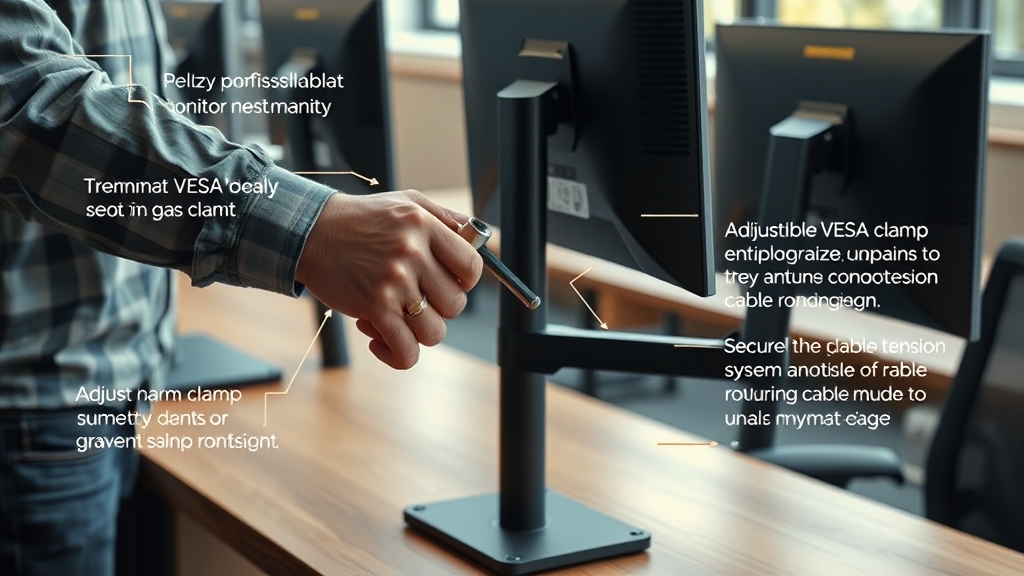
- To swap users: unplug user cables at dock/monitor, slide out monitors, reattach new user’s display using quick-release or VESA bolts, adjust tension and tilt for new weight. Confirm cable and power routing has enough slack/length.
- Run a final check for wobbles, arm sag, or monitor droop before beginning work.
For enhanced productivity and reduced risk of failed handoffs, see our best practices for workspace converters.
Buyer checklist and procurement template (short)
Reference this short checklist/RFP template for your internal procurement or supplier vetting workflow:
- Max weight per arm and total load (futureproof for monitor upgrades)
- Supported VESA pattern(s) (75×75/100×100 mandatory, with optional adapters)
- Full tilt/swivel/vertical adjustment range
- Mounting type(s) appropriate for your desks (include reinforcement if needed)
- Warranty length (prefer 5/10 years minimum), coverage details, and repair/spare part sourcing
- Integrated cable management routing
- Smart/IoT user tracking and posture options (optional but emerging RFP differentiator)
- Vendor regional support and deployment experience (Asia-Pacific/North America leadership)
See emerging trends in our AI posture tracking chair guide and best electric standing desk resource.
Appendix — trusted brands, warranty norms, and quick reference links
- Trusted Brands (per recent global market analyses): Ergotron, Legrand AV, Modernsolid, Atdec, Eastern Global.
- Typical Warranty Coverage: Entry level arms: 1–3 years; enterprise/pro modular arms: 5–10 years.
- Useful Technical References:
Reliable vendor selection, long-term warranty support, and quick access to spare parts separate a great investment from a costly misstep.
FAQ
What is the ideal load capacity for an articulating monitor arm dual?
Best practice recommends at least 8-20 lbs per arm, but always verify your monitor’s weight and futureproof for heavier/larger displays. Check both per-arm and combined load ratings before purchase.
How much desk space do I need behind my workstation for a dual monitor arm?
Most arms need a minimum of 4-8″ behind the desk for full articulation. For flush-to-wall setups, consider specialized short-reach arms or wall-mounted arms for maximum stability.
How often should I service my dual monitor arm mount desk?
Quarterly hardware and tension checks are advised, with annual lubrication of moving joints or as recommended by your arm manufacturer. Monitor for any sagging or difficulty adjusting.
Can I use an articulating monitor arm dual for hot-desking or shared environments?
Yes, but prioritize arms with quick-adjust tension controls, broad weight support, and easy cable management. Modular or IoT-enabled arms speed up swaps and reduce ergonomic risk during reconfiguration.
Which brands offer the best warranty and reliability?
Leading global brands include Ergotron, Legrand AV, Modernsolid, Atdec, and Eastern Global, with enterprise models commonly providing 5-10 year warranties and robust parts support.