

Under desk foot hammock sales are soaring in 2024 as more remote workers, office pros, and serious gamers seek practical tools to reduce back pain, boost circulation, and fight fatigue during long hours at the desk. But not every design delivers — using evidence and hands-on criteria, this guide cuts through hype so you buy and install a foot hammock that actually helps.
Key Takeaways
- The under desk foot hammock market is growing at nearly 6% annually, driven by remote work and corporate wellness budgets (see source).
- Proper use can cut lower back pain by up to 31.7% and boost lower leg blood flow by ~30% (see data).
- Common pitfalls: Clamp-on designs often fail on sit-stand or angled desks, and soft fabrics wear fast. Choose proven materials and check compatibility.
- Market snapshot — size, growth drivers, and 2024–25 trends
- How to choose and install an under desk foot hammock that works
- Advanced analysis & common pitfalls (comfort, durability, install)
- Conclusion & next steps
- Frequently Asked Questions
Market snapshot — size, growth drivers, and 2024–25 trends
The global under desk foot hammock market is set to hit approximately $487 million in 2025, with forecasts pointing towards $856 million by 2034 and a steady CAGR of 5.8–6% [1]. North America commands the largest share — nearly 43% — thanks to aggressive innovation by ergonomic brands, heightened chronic back pain rates (62% among desk workers), and serious investments from corporate wellness programs [5].
Remote and hybrid work surges, stricter occupational safety rules, and major office redesigns in 2024–25 are all fueling category growth. Foot hammocks now compete directly with premium ergonomic footrests, with many buyers demanding evidence-backed health outcomes before investing.
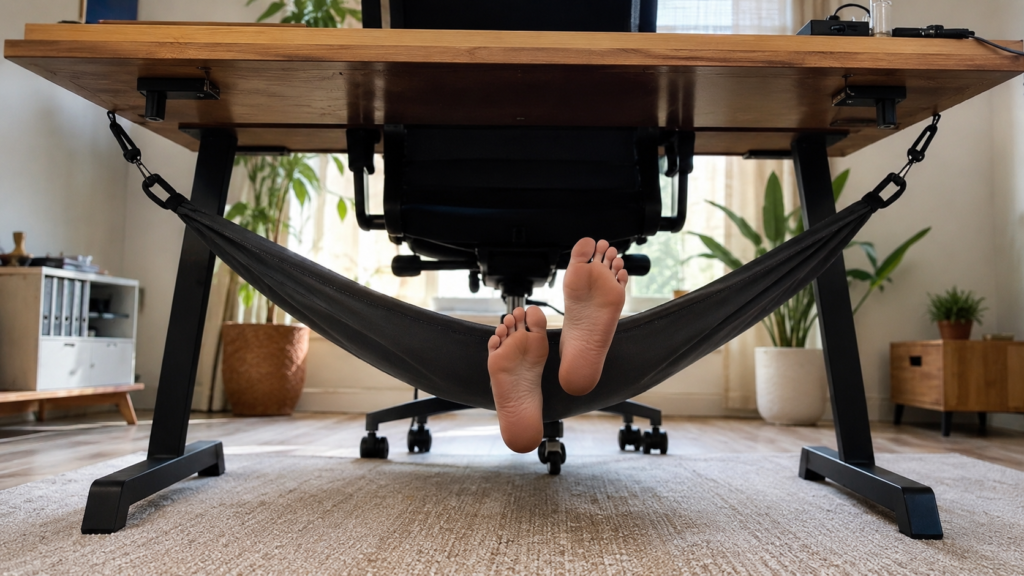
Most top models (like UPLIFT and 5Fold) are positioned as adjustable, dual-mode, and made for universal clamping — a shift from old-school, fixed footrests to dynamic solutions designed for posture and comfort.
How to choose and install an under desk foot hammock that works
Buying the right ergonomic desk footrest hammock is more than picking the top-rated model. Start by matching the device to your desk setup, checking clinical features, and making sure real-world use will promote posture and circulation — not just look good on paper.
- Assess your sitting posture and needs first. If you sit 6+ hours/day, are under 5’8″, or notice back/leg discomfort, a foot hammock is proven to help. Consider flexible alternatives like traditional ergonomic footrests if your desk is nonstandard or extra thick.
- Pick by adjustability and weight limit. For optimal blood flow, choose a hammock with height adjustability (ideally 11 to 23.5 inches, like the UPLIFT). Check the rated max weight — most support 60–120 pounds, but specs may vary. (Editorial: verify actual weight limits before publishing)
- Evaluate materials and durability claims. Canvas, nylon, or mesh are common; memory foam inserts add comfort but may degrade faster. If you value eco-materials, check for third-party certifications and avoid unbranded generic imports. Mesh frays fastest; canvas resists abrasion best.
- Review clamp type and install process. Models with universal clamping (like 5Fold) fit most desks, while some only work on classic rectangular desk panels. Sit-stand and angled desks may require dual-mode or removable designs.
- Install and adjust for ergonomics. Mount just below knee level (hips slightly above knees). When seated, your hips should open comfortably past 90°, and feet should rock gently without tension. After 2 hours, do a calf squeeze test — your legs should feel less stiff and warmer.
- Test rocking smoothness and noise. A good hammock subtly rocks with no squeaks, aiding micro-movement and circulation (see review).
- Monitor comfort and make quick tweaks. Insufficient padding or a hammock mounted too high/low often leads to discomfort — retest fit after a week and adjust as needed.
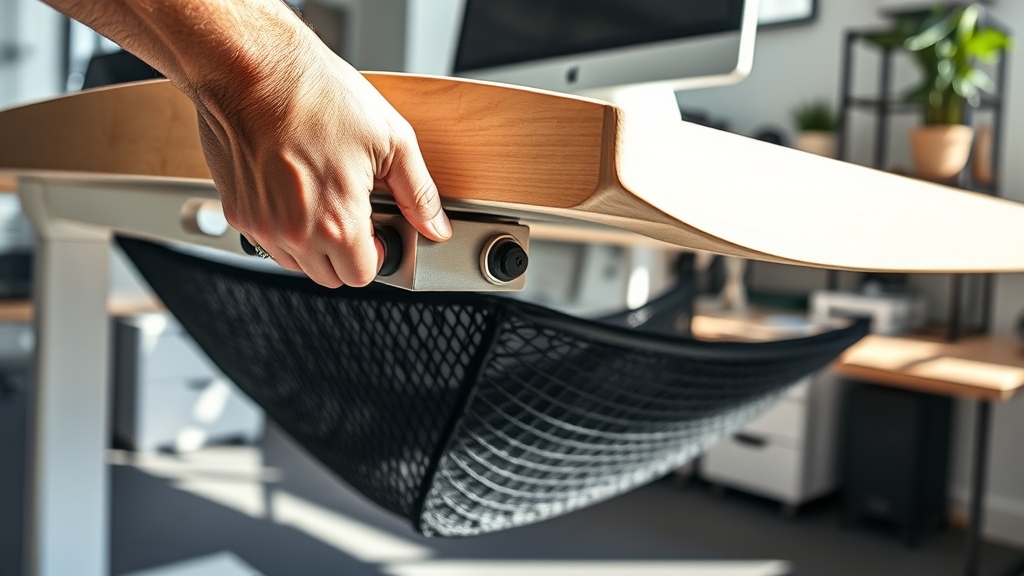
For best results, combine your foot hammock with a true ergonomic office chair (see the ergonomic office chair buying guide), and don’t neglect workspace posture as a whole. Integrate with a standing desk converter or under desk treadmill for high-variation routines.
Advanced analysis & common pitfalls (comfort, durability, install)
Despite benefits, many users encounter avoidable problems with under desk foot hammocks. Use this analysis — and the comparison matrix — to sidestep the usual traps.
- Comfort issues: Thin padding, fabric that stretches too much, or hammocks installed at the wrong height all lead to foot/ankle discomfort. Example: Memory foam models are plush but compress quickly, while loose mesh may sag and destabilize your posture.
- Durability failures: Canvas and cheap mesh tear or fray after months. Clamp mechanisms (especially plastic) can crack, and some designs slip with daily use. Look for customer photos or reviews showing the hammock after 3+ months, not just out-of-box shots.
- Installation hassles: Clamp-on types may not fit curved, thick, or variable desk edges (especially on sit-stand desks). Some mounts also scuff or gouge wood tops. Universal clamping or convertible dual-mode designs solve this, but may cost more.
| Common Issue | Reported Example | Why It Happens | What To Look For |
|---|---|---|---|
| Comfort (Padding/Support) | Feet dig into overstretched mesh, causing strain. | Low-density fabric; poor height adjustment. | Choose dense canvas, thick insert, and test fit after install. |
| Durability (Materials/Clamps) | Canvas/mesh frays, clamps snap after months. | Plastic hardware or thin fabric. | Seek metal hardware; verify warranties and durability claims. |
| Installation (Clamp/Fit) | Won’t fit sit-stand or beveled desk edge; slips off easily. | Poor clamp reach; incompatible with thick/odd desk profiles. | Universal or dual-mode clamps (see 5Fold); check install videos. |
| Noise (Rocking) | Squeaks distract during movement. | Poor bearing or wood/metal friction. | Look for models reviewed for quiet operation. |
On balance, a well-installed, good-quality ergonomic desk footrest hammock lets your hips open past 90°, maintains a neutral pelvis/shoulder, and is shown in studies to cut back pain and boost lower-leg blood flow by about 30% [5]. Yet, making the wrong choice or installation can leave you worse off than before — always verify compatibility and adjustment range up front.

Want to address more workspace pain points? Explore our ergonomic footrest selection guide or review how small setup changes — like adding a large desk mat or lumbar support pillow — drive large comfort gains. For best results, combine with an ergonomic standing desk converter if you alternate between sitting and standing.
Conclusion & next steps
There is strong clinical and user evidence that ergonomic desk footrest hammock use can reduce back pain, improve circulation, and support long-term workspace health — if you select the right materials, install correctly, and avoid common compatibility traps. Review real specs, check your desk edge, and buy only from brands with proven durability claims and strong warranties.
Ready to improve comfort? Use this checklist and compare top models side by side. Try a new under desk foot hammock for a 30-day test, or ask your HR team about wellness funding if buying for work. Your body will thank you — and your future self will, too.
Frequently Asked Questions
How do I install an under desk foot hammock on a sit-stand or curved desk?
Try universal clamp models for variable edges, or select a convertible hammock like the UPLIFT which works as both clamp-on and freestanding. Always protect your desk surface with felt pads if you’re unsure about the clamps.
Does a foot hammock really help with posture and circulation?
Clinical research shows a reduction in back pain by about 31.7% and increased lower leg blood flow by ~30% when used correctly. Set the hammock just below knee height for best effect.
Is there a risk of the hammock damaging my desk or wearing out?
Poor quality clamps can damage finishes, and low-grade mesh or canvas may fray after months. Choose metal clamps and reinforced fabrics. Always check durability claims and real-world reviews before buying.
Who should avoid using a foot hammock?
If your feet already rest comfortably flat on the ground, or you have medical restrictions on leg position, a hammock may not help. Always check with your health provider for specific conditions.
What’s the key adjustment for optimal effect?
Set the hammock height so your hips open slightly past 90 degrees. Your feet should rock gently, not strain or dangle. Re-adjust after a week of use as the fabric settles.