

Height adjustable standing desk wood models are in high demand among hybrid professionals who value a premium workspace that combines aesthetics, healthy ergonomics, and reliable performance. But as someone balancing technical needs (stability, performance, longevity) with the desire for real wood and smart features, it’s easy to get overwhelmed—or disappointed if you make the wrong call. This guide breaks down what actually matters when shopping for a solid wood standing desk, with market data, technical checkpoints, and buyer-first advice.
Key Takeaways
- Solid wood, height adjustable desks command a market premium for their eco-credentials and durability, but stability issues and heavy weight often top user complaints—demand clear specs before purchasing.
- Desk buyers in 2024–2032 are driven by hybrid work, aesthetics, and wellness—wood standing desks now make up over 43% of the market segment and electric models dominate by revenue.
- Success means quantifying load capacity, motor reliability, BIFMA stability, quiet operation, and certified sustainability before you buy—never assume a top price guarantees performance.
- What Makes a Height Adjustable Standing Desk Wood Model the Buyer’s Sweet Spot?
- Step-by-Step: How to Choose the Right Desk (Buyer’s Guide)
- Advanced Analysis & Common Pitfalls
- Conclusion & Next Steps
- FAQs
What Makes a Height Adjustable Standing Desk Wood Model the Buyer’s Sweet Spot?
Today’s surge in height adjustable standing desk wood models is more than a trend. Research shows that the global standing desk market will climb from $8.1 billion in 2024 to $12.3 billion by 2032, with wood desks capturing nearly 44% of the material market. But why?
Professional buyers—especially those working hybrid or remote—demand workspaces that look intentional, feel solid, and integrate wellness features. Real wood standing desks meet these needs, offering tactile quality, sustainability (look for FSC/green certifications), and premium presence that outshines laminate or MDF alternatives.
Electric, solid wood standing desks dominate revenue share thanks to their smooth adjustability, presets, and seamless fit in both home and office spaces. At the same time, manual models have gained ground for buyers wanting reliability without the price or electronic complexity.

But not every desk delivers. Even reputable brands like IKEA’s Bekant have racked up returns over wobble complaints, while live-edge solid wood desks frequently get poor reviews for heavy weight and mechanical issues. That’s why combining data with real-world pain points is essential before you commit.
Step-by-Step: How to Choose the Right Desk (Buyer’s Guide)
- Measure your workspace and height needs.
- Ensure your clearance for the full sit-stand range (~26–52 inches is ideal for adults up to 6’8″, Business Insider review).
- Note minimum depth for monitor arms, cable trays, and accessories. See dual monitor arm guide.
- Confirm the desk’s lifting capacity and stability.
- Look for documented capacity of at least 120–130 kg (265–285 lbs) with BIFMA or manufacturer stability reporting.
- Review consumer feedback about sway or wobble, especially for large, solid wood tops (see Wirecutter’s stability testing).
- Check the desktop thickness and motor/frame quality.
- Premium desks use 25–30 mm hardwood (oak, walnut, maple). Thinner tops (under 20 mm) are more prone to vibration.
- Dual-motor frames are quieter (<45 dB is best), smoother, and less likely to fail calibration than single-motor.
- Assess programmable features and smart add-ons.
- Look for programmable height presets, anti-collision sensors, and optional USB/power integration.
- Consider IoT/built-in tracking if you value posture/usage analytics (relevant for wellness budgets).
- Vet sustainability credentials and finish quality.
- Check for FSC-certified options. Require documented proof—not just statements.
- Ask about finish type (oil, lacquer, UV-cured); request care instructions and repair options.
- Benchmark the warranty, shipping, and assembly support.
- Warranties should cover 5+ years on frame, 2+ years on motors. Watch for exclusions!
- Get clear shipping weight (solid wood tops can reach 120 kg); confirm if installation help is optional or required.
- Negotiate return and repair terms. Not all DTC sellers offer free pickup or RMA if desk needs to be returned.
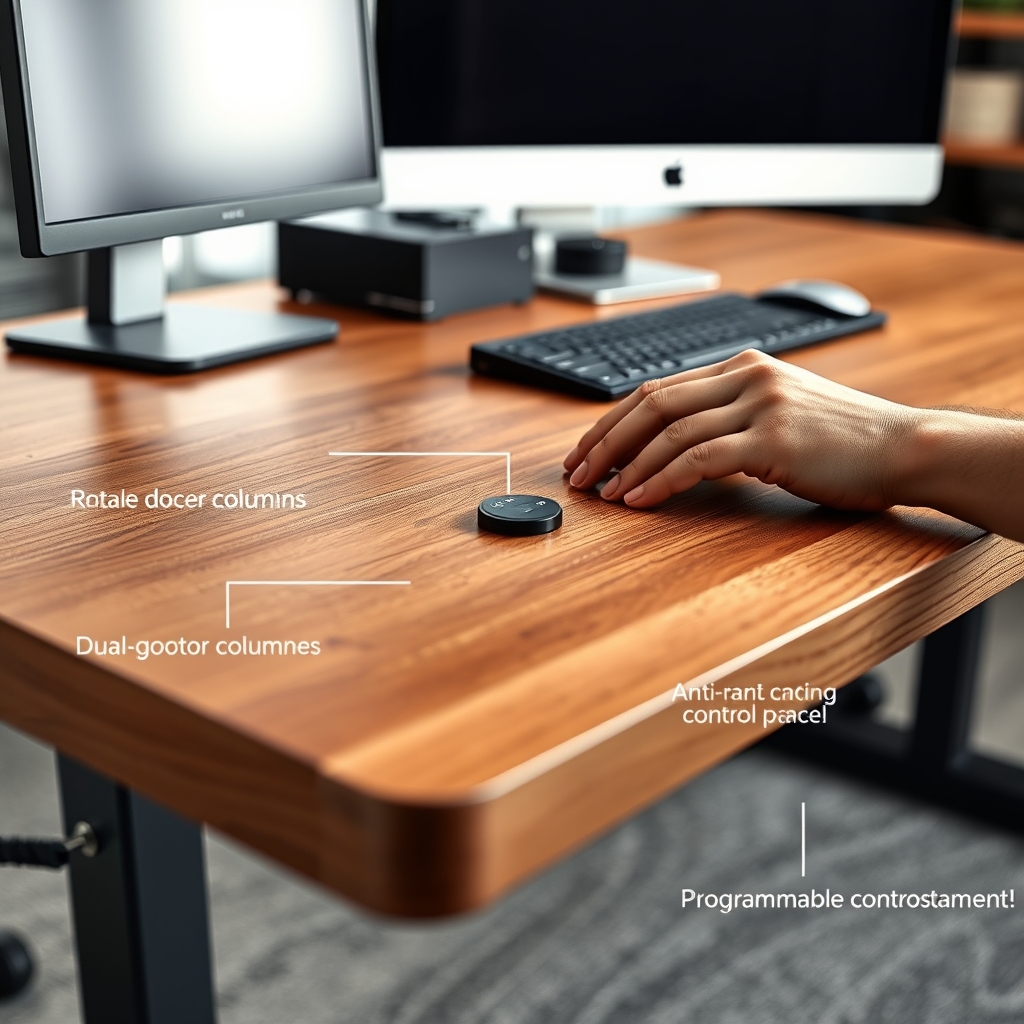
For a detailed review of electric versus manual models, budget bands, and top-rated recommendations, check the electric standing desk buying guide.
Advanced Analysis & Common Pitfalls
Real-world buyers consistently report a few recurring pain points with solid wood height adjustable desks:
- Stability and Sway at Full Height: Especially with heavy, thick tops (70–120 kg), cheaper frames struggle with lateral stability, leading to a distracting or even unsafe work experience. Wirecutter highlights recurring issues with the IKEA Bekant and knockoff live-edge frames.
- Extreme Weight and Shipping Hassles: Delivery and installation is no joke—some desks require two people to move or reposition. Return shipping gets complicated (and expensive) fast. Marketplace sellers rarely offer white-glove returns.
- Finish Sensitivity and Durability: Oil and natural wax finishes look stunning but are easier to scratch and stain versus UV or lacquered MDF/veneer options. Repairs are possible, but require know-how and patience.
- Motor, Lift, and Electronics Reliability: Low-end dual-motor desks (and some single-motor options) are prone to actuator failures, noisy operation, or memory loss requiring recalibration. Motor part availability and upgradeability varies widely across brands.
- Sustainability Claims Without Proof: “Eco,” “solid wood,” or “green” are often used without proper chain-of-custody documentation. Always request FSC, CARB, or relevant site mill tags before you buy.
| Feature | Solid Wood Standing Desk | Veneer / MDF Composite |
|---|---|---|
| Durability | Very high; can last decades when properly finished/maintained | Moderate; prone to chipping, swelling, or veneer delamination over years |
| Weight | High (70–120 kg for large tops); difficult to ship/relocate | Low–moderate; easy to assemble/disassemble, lighter shipping |
| Finish Longevity | Repairable; may require spot refinishing | Surface chips harder to repair without total replacement |
| Sustainability | FSC-certified options have highest eco credentials; low emissions with proper sourcing | May contain formaldehyde/MDF glues unless certified; lower cost; FSC/GreenGuard available on some products |
| Market Price | USD 600–1,500 (premium species >USD 1,600); 28–45% more than veneer/MDF | USD 350–850; widely available, less custom |
Brands like Uplift, Branch, and high-end DTC sellers (see Modern Wood Style examples) sell solid walnut and oak desks from $579–$1,159 and up. But beware: sometimes a well-veneered MDF option gives you 90% of the look and feel for far less weight, cost, and hassle.
To see how solid wood models compare with other home office gear that can boost comfort (like footrests or keyboards for wrist pain), check out our broader sustainable furniture guide here.

Conclusion & Next Steps
Choosing the right height adjustable standing desk wood model means more than checking a few boxes. Focus on the technical essentials (stability, capacity, warranty), but also demand evidence for sustainability claims and test features that matter for your workflow. Avoid underpowered frames, unproven finishes, or vendors who can’t provide specs, video proof, or documented service coverage. When done right, a solid wood standing desk makes your workspace exceptional—and improves daily comfort, focus, and wellbeing.
Need help comparing models? Compare vetted solid-wood sit-stand desks to see what fits your requirements.
Your next step: revisit your technical priorities, set your price band, and ask tough questions—using the advice in this guide ensures your investment in a height adjustable standing desk wood model is smart, sustainable, and productive.
FAQs
Is a solid wood standing desk worth the premium?
For many buyers, yes—you’re paying for tactile feel, sustainability, durability, and premium aesthetics that veneer/MDF can’t quite match. But stability, shipping, and finish care are common issues to screen for. Demand verifiable specs and certification.
How hard is it to move a solid wood standing desk?
Expect real weight—tops often weigh 70–120 kg, making solo moves risky. If you may move frequently, consider a lighter veneer or modular top, or choose vendors offering white-glove delivery and setup.
Will my desk wobble at full standing height?
Some models, especially those with thin frames or oversized tops, can sway or vibrate—even from known brands. Look for BIFMA stability certification, dual-motor frames, and customer video reviews before buying.
How do I verify FSC/CARB sustainability claims?
Always ask for the desk’s official certification paperwork or mill tags. Some sellers state “FSC-certified” but use it only for veneers or substrates—ask for proof matching your specific model.
How do I maintain or repair a solid wood desk finish?
Light dings or scratches can usually be sanded and spot-finished. For oil or wax finishes, regular reapplication helps maintain luster. Ask your seller for recommended maintenance and compatible products.